
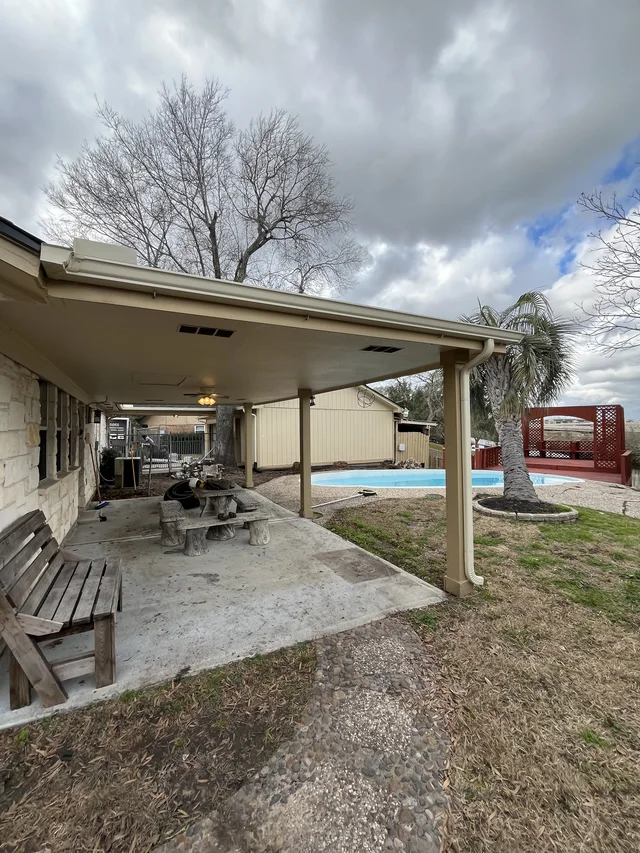
Replace Gutters Damaged by Severe Weather
Storm damage is not always limited to a visible dent or one loose section. Wind, heavy rain, falling debris, and roof-edge movement can leave gutters separated from the fascia, twisted out of alignment, leaking at corners, or draining toward the wrong area. When a damaged run can no longer carry water cleanly to the downspouts, replacement may be the better long-term option.
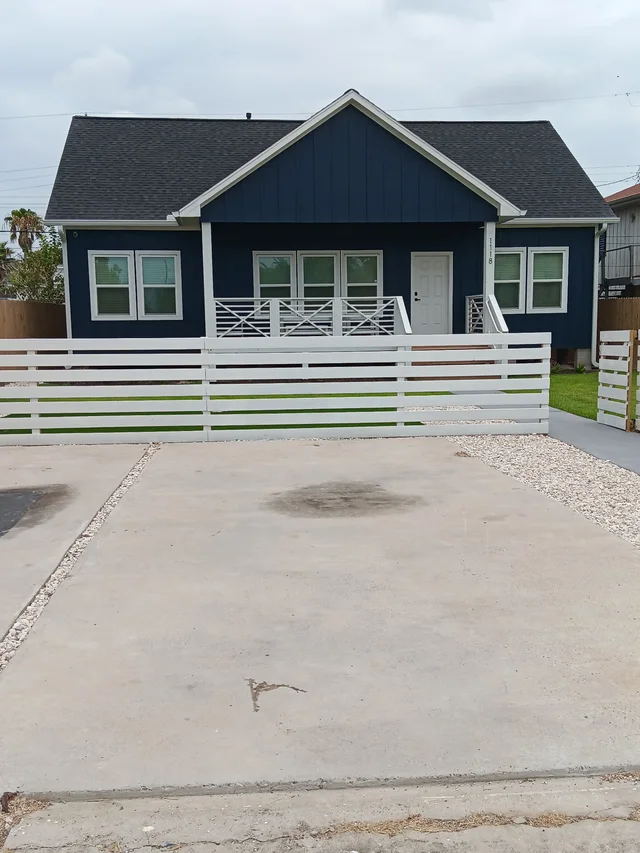
What Gets Checked After a Storm
A storm-damage gutter review should look at the full water path, not only the most visible damaged area. Important items include impact marks, sagging or twisted runs, pulled fasteners, separated seams, leaking corners, failed outlets, loose downspouts, fascia condition, and places where runoff now lands near entries, patios, walkways, planting beds, or slab-adjacent soil.
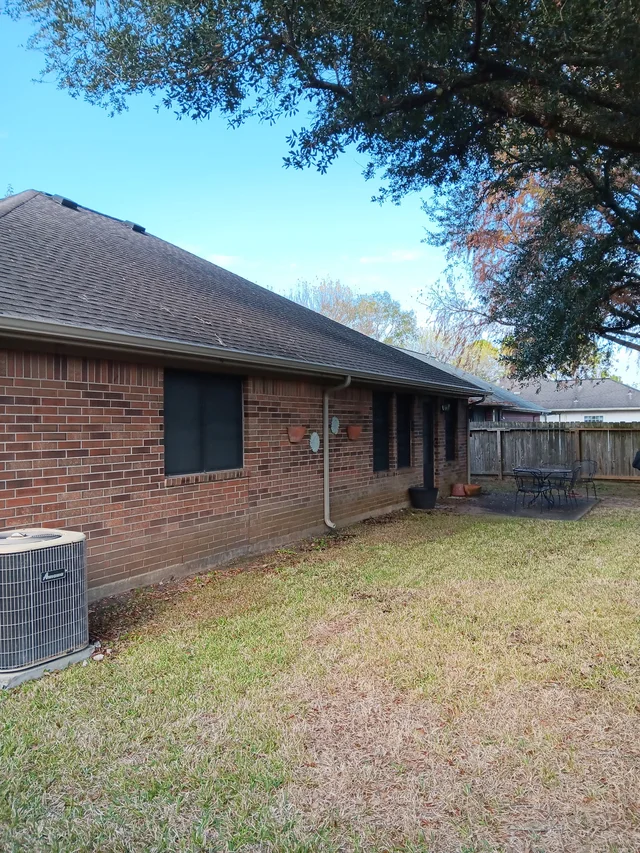
When Replacement Makes More Sense Than Repair
Repair may be practical when the damage is isolated and the rest of the gutter system is still aligned, attached, and draining correctly. Replacement becomes more appropriate when long runs are bent, multiple sections have pulled away, the pitch no longer moves water, outlets are damaged, or prior repairs would leave the system with continued drainage problems.
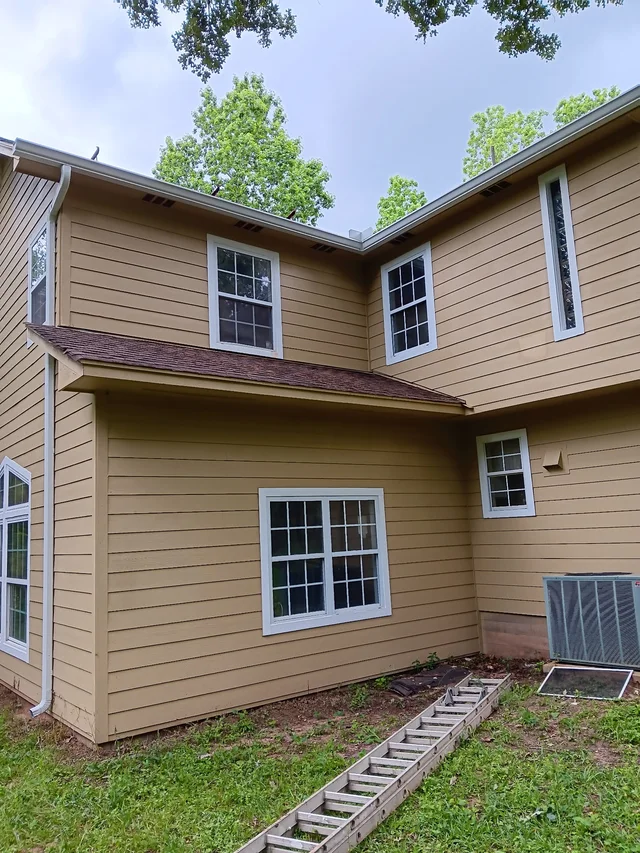
Plan the New Water Path
Storm-damage replacement is a chance to correct more than the broken gutter. The new plan should match gutter capacity, outlet placement, downspout routing, and ground-level discharge so roof water has a practical path away from the structure. Downspouts and extensions should move water without creating a trip hazard, washing out landscaping, or sending runoff toward a neighboring property.
Prepare for a Storm-Damage Gutter Estimate
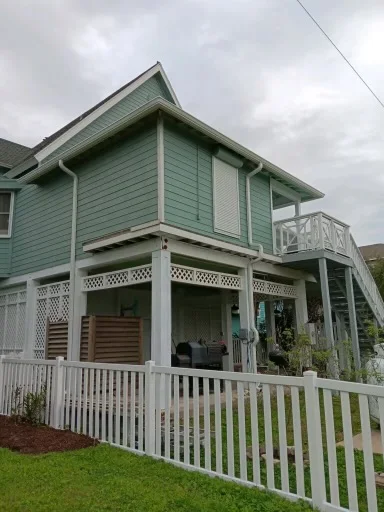
Before requesting an estimate, gather the property address, photos of the damaged areas if available, the number of stories, and notes about where water overflowed or landed during the storm. Include whether the concern is limited to one section or affects multiple roof edges. Clear details help the visit focus on the damaged runs, attachment surfaces, outlets, downspouts, and replacement options.
Related Gutter Services
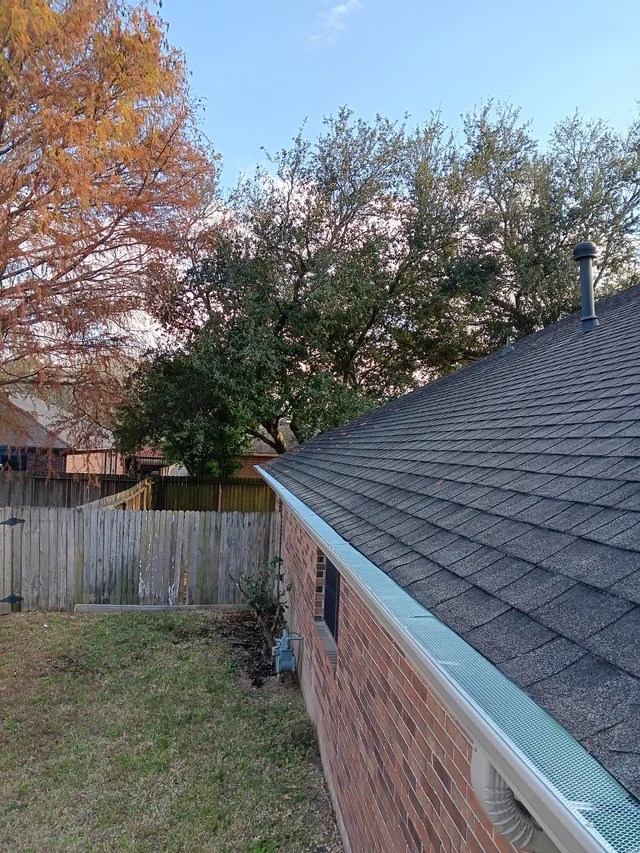
Storm damage can overlap with several gutter needs. If the system is mostly intact, gutter repair may be enough for loose sections, leaking corners, or failed outlets. If older gutters are worn, undersized, or poorly routed, rain gutter replacement may be the better fit. If water reaches the ground in the wrong place, downspout installation and drainage routing should be part of the conversation.
Related gutter planning
Request an estimate
Request a free storm-damage gutter replacement estimate for your Houston property. Share the address, damaged areas, number of stories, and any photos or drainage concerns so the replacement plan can focus on the right sections of the gutter system.
Request a free estimate Contact Houston Seamless Gutter Installers
Storm-Damage Gutter Replacement FAQs
How do I know if storm-damaged gutters should be repaired or replaced?
Repair may be enough when damage is isolated and the rest of the system is still straight, secure, and draining correctly. Replacement is more likely when long runs are twisted, fasteners have failed in multiple areas, outlets are damaged, or water no longer reaches the downspouts properly.
What gutter damage should I look for after severe weather?
Look for sections pulling away from the fascia, bent or twisted runs, leaking corners, loose downspouts, damaged outlets, sagging lines, overflow during normal rain, staining, washed mulch, eroded planting beds, or water landing near entries, patios, walkways, or slab-adjacent soil.
Can downspouts be changed during storm-damage gutter replacement?
Yes. If storm damage exposed a drainage problem, the replacement plan can include outlet placement, downspout location, and ground-level discharge routing so water has a clearer path away from the property.
What should I provide when requesting a storm-damage gutter estimate?
Provide the property address, the number of stories, the areas that appear damaged, photos if available, and notes about where water overflowed or collected during the storm. Exact gutter footage is not required before requesting an on-site quote.