
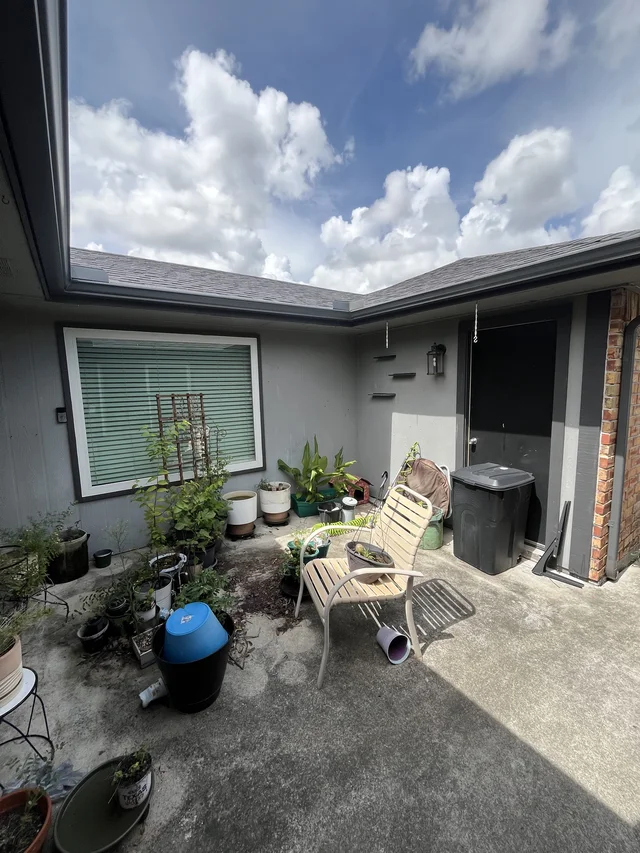
Replace Gutters That No Longer Move Water Correctly
Rain gutters may need replacement when the system is worn, leaking at multiple points, sagging, undersized for the roof area, separating from the fascia, or sending water toward the wrong places. A replacement project is an opportunity to correct more than the visible gutter runs. The layout should also account for outlets, corners, downspouts, extensions, roof valleys, walkways, planting beds, patios, and slab-adjacent soil.
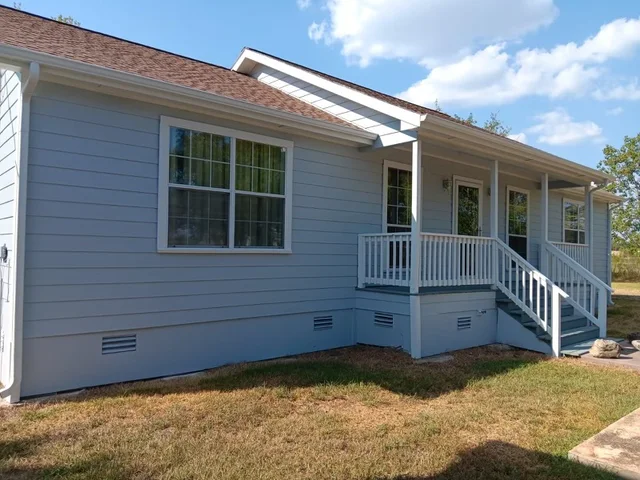
A Better Replacement Starts With the Water Path
The goal of rain gutter replacement is not simply to remove old gutters and install new metal in the same pattern. The system should collect roof runoff and move it toward practical discharge points. For many Houston properties, that means reviewing where water currently overflows, where downspouts discharge, where soil or mulch washes out, and whether existing runs have enough outlet capacity.
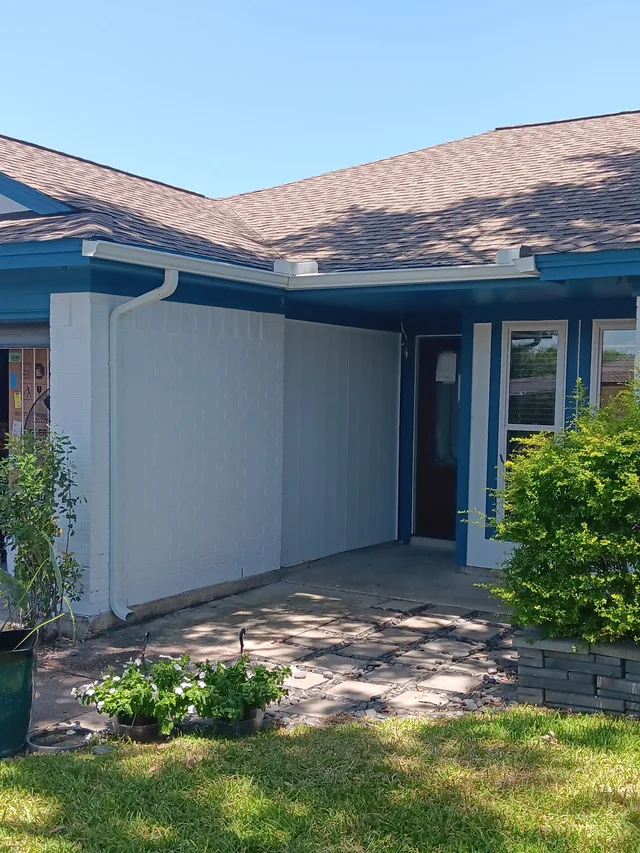
What the Replacement Review Should Cover
Before a replacement quote is prepared, the existing gutter system should be reviewed for failing seams, loose sections, damaged fascia contact points, poor pitch, leaking corners, undersized runs, clogged or poorly placed outlets, and downspouts that discharge too close to problem areas. If the current system has been patched several times or still overflows during normal rain, replacement may be more practical than another isolated repair.
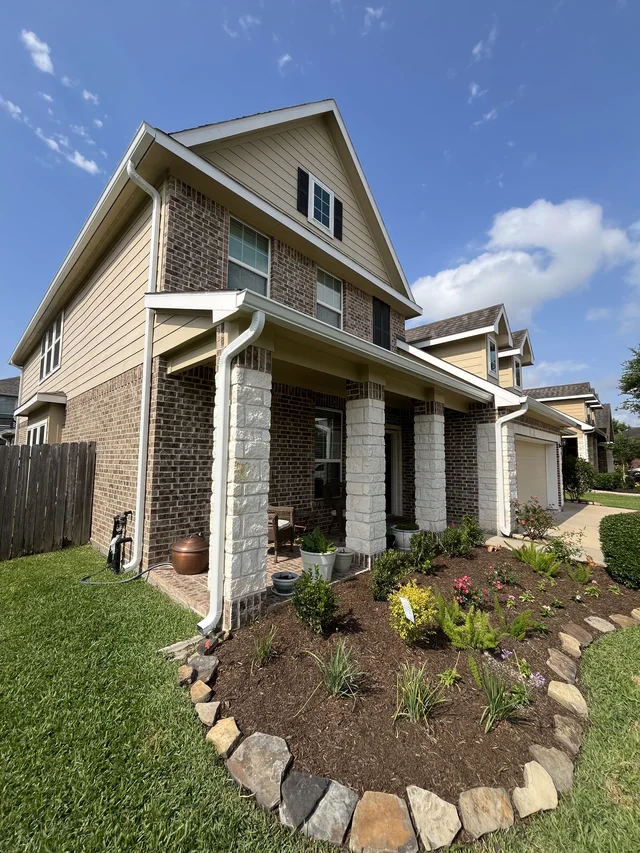
Seamless Gutters, Sizes, and Downspout Planning
Seamless gutter replacement can reduce repeated joints along straight runs and create a cleaner roofline appearance. Gutter size, outlet placement, and downspout routing should match the roof area and the way water moves around the property. Larger runs, long roof edges, steep pitches, and valleys that concentrate water may need extra planning instead of a one-size-fits-all replacement.
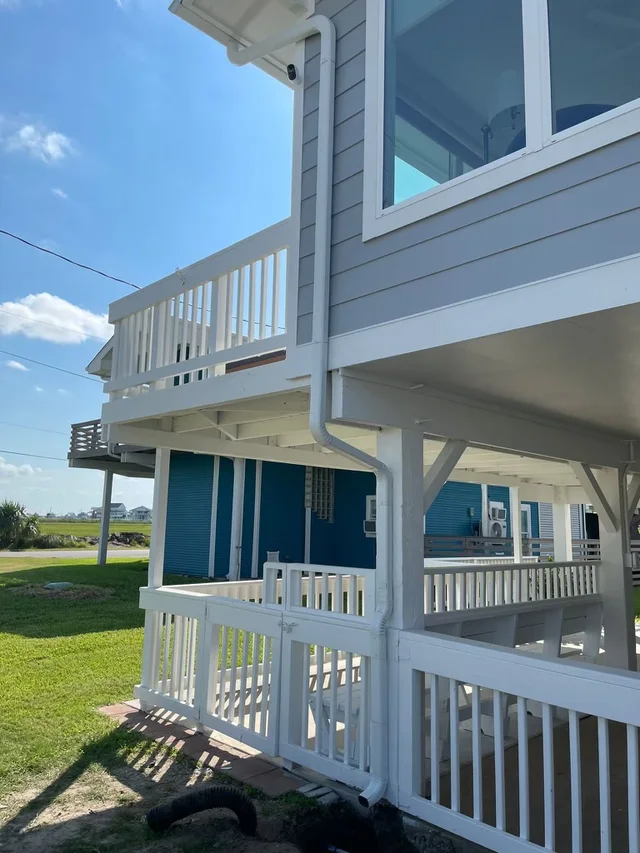
Prepare for a Gutter Replacement Estimate
Helpful estimate details include the property address, the number of stories, known overflow or leaking areas, photos if available, preferred gutter color or finish, and any locations where water currently creates problems. The estimate conversation should also cover whether downspouts, extensions, or attachment areas need attention as part of the replacement.
Related gutter planning
Request an estimate
Ready to replace failing rain gutters? Request a free gutter replacement estimate for your Houston property and include the areas where water currently leaks, overflows, or drains in the wrong direction.
Request a free estimate Contact Houston Seamless Gutter Installers
Rain Gutter Replacement FAQs
When should rain gutters be replaced instead of repaired?
Replacement may make more sense when gutters are sagging, separating, leaking in several places, repeatedly overflowing, undersized for the roof area, or routed in a way that keeps sending water toward problem areas. A limited repair may still be appropriate when the issue is isolated.
What is checked before replacing rain gutters?
A replacement review should look at the existing gutter runs, corners, outlets, downspouts, fascia attachment areas, roof valleys, discharge points, and any places where water is staining, pooling, washing out landscaping, or moving toward slab-adjacent soil.
Can replacement gutters improve drainage around the property?
Replacement gutters can help when the new layout includes practical outlet placement and downspout routing. The gutter run collects roof water, but the downspouts and extensions determine where that water goes at ground level.
Should downspouts be replaced with the gutters?
Downspouts should be reviewed during a gutter replacement project. Existing downspouts may be poorly placed, undersized, damaged, or routed toward areas where water should not collect.