
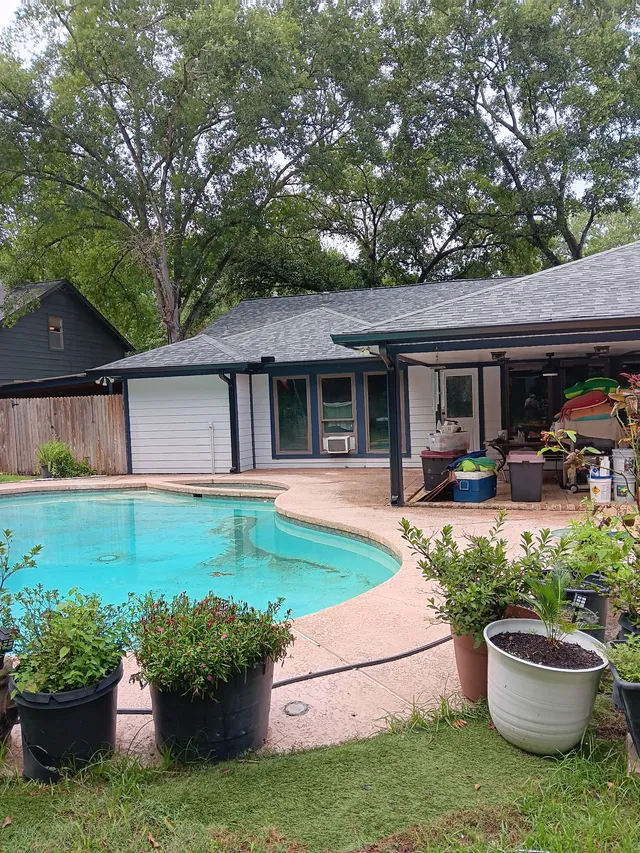
Look for overflow during normal rain, staining, separation from fascia, standing water, leaking corners, eroded beds, washed mulch, sagging runs, or downspouts discharging in the wrong place.
The short answer
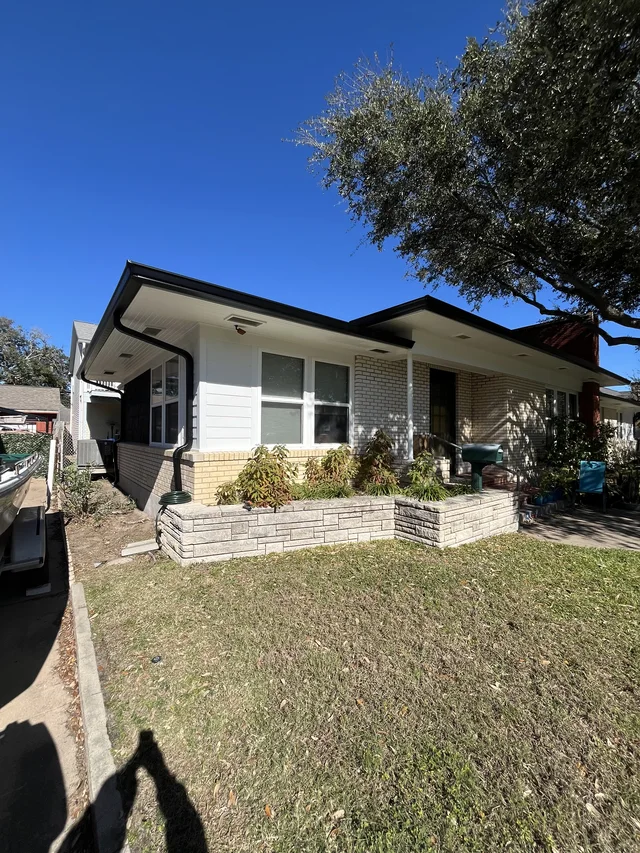
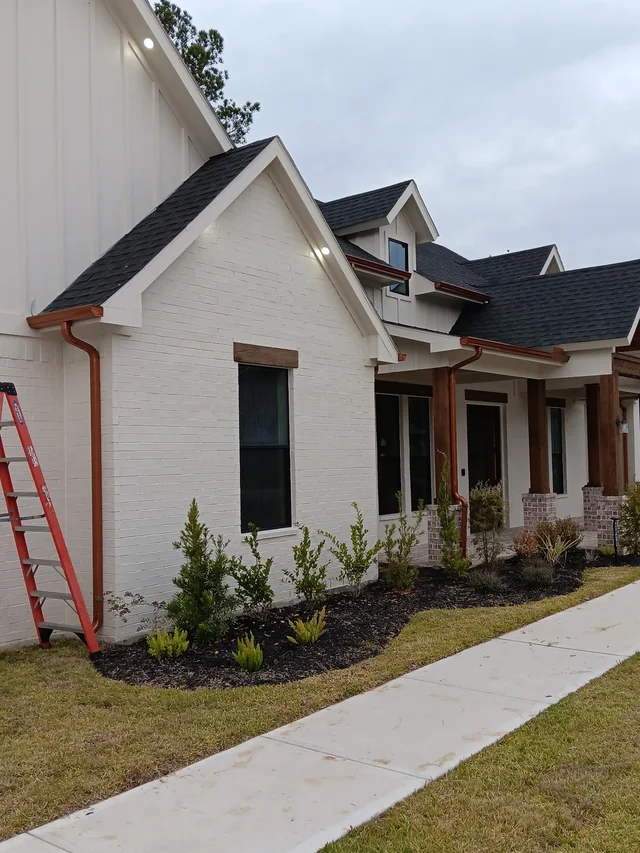
Look for overflow during normal rain, staining, separation from fascia, standing water, leaking corners, eroded beds, washed mulch, sagging runs, or downspouts discharging in the wrong place. For Houston properties, the decision also needs to account for large roof planes, visible front elevations, landscaped beds, patios, and drainage routes that need a clean finish.
How to evaluate the property
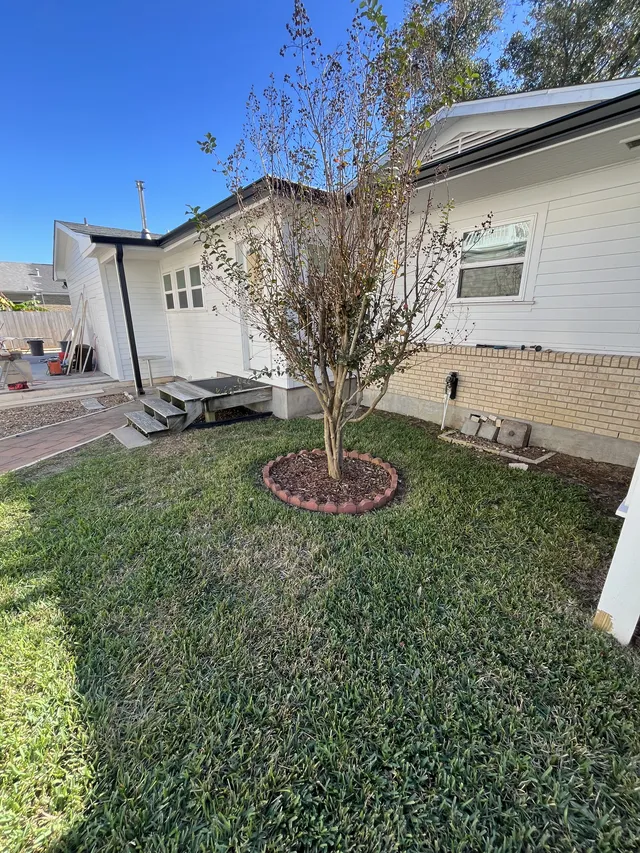
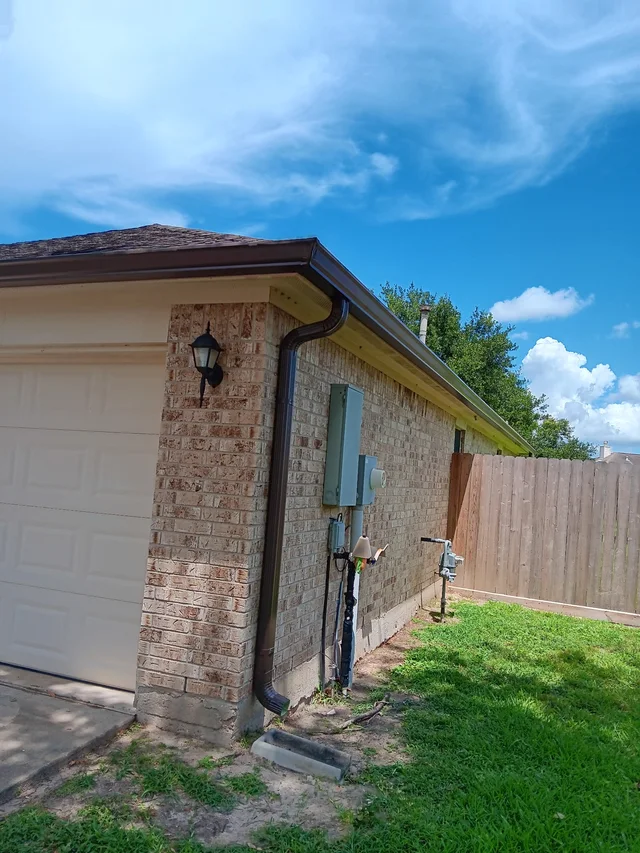
Trace the full water path from roof to ground. Map each roof plane that drains toward the gutter, giving special attention to valleys that combine flow from several areas. Follow that path through the outlet and downspout to the final discharge point; an assessment ending at the roofline misses part of the system.
- When conditions allow safe observation, watch how the system behaves in the rain.
- Take photos of any overflow, leakage, staining, erosion, standing water, or unsecured sections.
- Record nearby trees and distinguish the debris present, including oak leaves, roof grit, seed pods, and material blown toward valleys.
- Account for the roof's size and pitch, the number of stories, accessibility, patios, pools, and drainage from neighboring areas.
- Choose whether the gutter should visually merge with the trim or form an intentional line across the exterior.
4-, 5-, and 6-inch choices
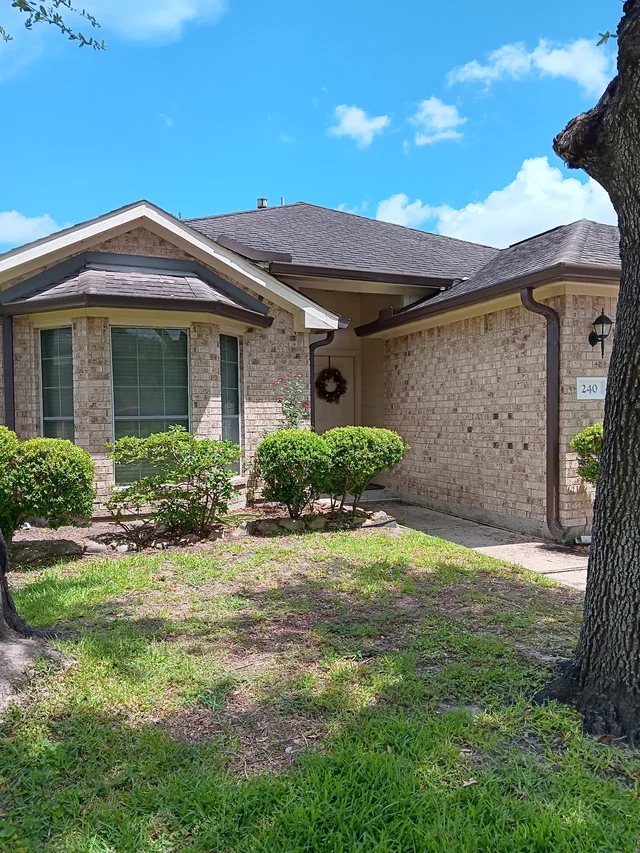
Gutter size indicates capacity, not inherent quality. It represents one variable in a complete water-management design. Although larger troughs handle increased volumes from expansive roof areas and concentrated rainfall, they still rely on correct pitch, outlet spacing, downspout sizing, sturdy attachment, and discharge clearance functioning together. You can expect $10 per foot for either 4 or 5 inch widths; the 6 inch option runs $12 per foot.
Questions to bring to an estimate
- Where does the worst overflow or erosion happen?
- Is the downspout outlet directing runoff toward a foundation, walkway, patio surface, or planting area?
- Are there long runs or major valleys feeding one section?
- Is the fascia sound enough for secure attachment?
- Would debris accumulation patterns on this property warrant considering protective covers or screens?
Common questions
Is an on-site review still needed?
Generally, yes. Reading about common failure indicators prepares you for a productive discussion, though precise solutions depend on roof pitch, fascia condition, outlet positioning, and site drainage characteristics that vary by structure.
Can I request a quote without footage?
Yes. Provide the address, cell number, requested work, project notes, and preferred contact window to request a free measurement.