
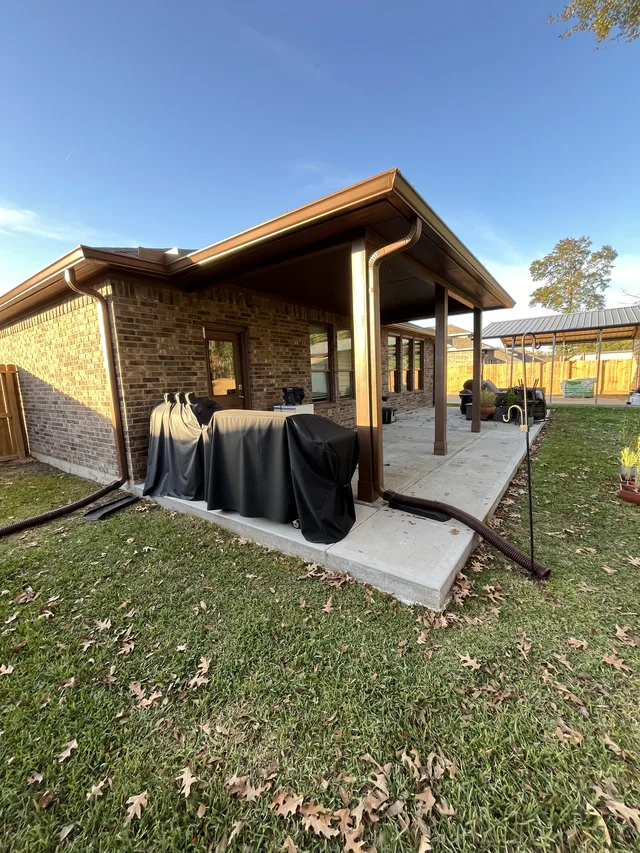
Gutters help control where roof water lands. The goal is not merely to catch rain, but to move concentrated runoff away from entries, patios, planting beds, walkways, and slab-adjacent soil. For Houston properties, the decision also needs to account for large roof planes, visible front elevations, landscaped beds, patios, and drainage routes that need a clean finish.
The short answer
Gutters help control where roof water lands. The goal is not merely to catch rain, but to move concentrated runoff away from entries, patios, planting beds, walkways, and slab-adjacent soil. For Houston properties, the decision also needs to account for large roof planes, visible front elevations, landscaped beds, patios, and drainage routes that need a clean finish.
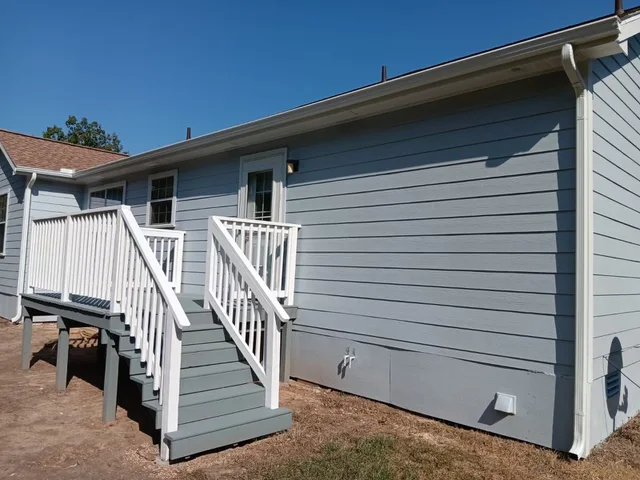
How to evaluate the property
Start your assessment at the roofline. Map each surface that drains into the gutter, paying close attention to valleys where water from several planes meets. Follow the path through the outlet and downspout all the way to the final discharge point. Any plan that ends at the roof edge leaves the job unfinished.
- Watch the system in action during a rain event, provided conditions are safe.
- Capture images of overflow, leaks, discoloration, soil erosion, standing water, or detached components.
- Record nearby vegetation and debris characteristics: broadleaf litter, granule accumulation, seed casings, and wind-carried matter collecting in valleys.
- Factor in roof dimensions, slope angle, building height, entry access, hardscaping, water features, and adjacent property drainage patterns.
- Determine whether the gutter should recede against trim or stand out as an intentional architectural element.
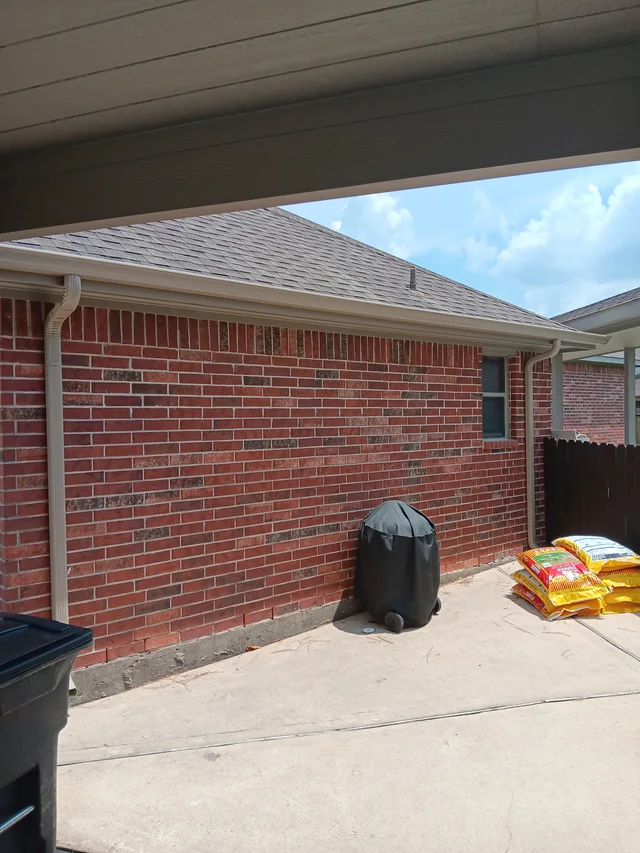
4-, 5-, and 6-inch choices
Gutter dimensions indicate capacity, not quality level. A wider trough handles greater runoff from expansive roofs and intense rainfall, yet performance depends on coordinated design: proper slope, adequately sized outlets, sufficient downspouts, secure mounting, and well-planned discharge points. Four-inch and five-inch systems both align with the $10-per-foot estimate; six-inch systems correspond to $12 per foot.
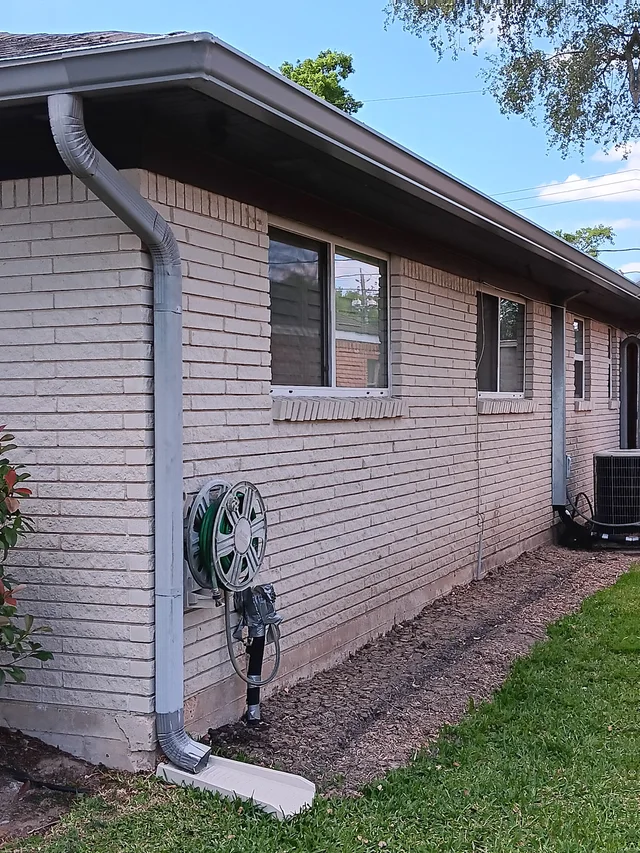
Questions to bring to an estimate
- Where does the worst overflow or erosion happen?
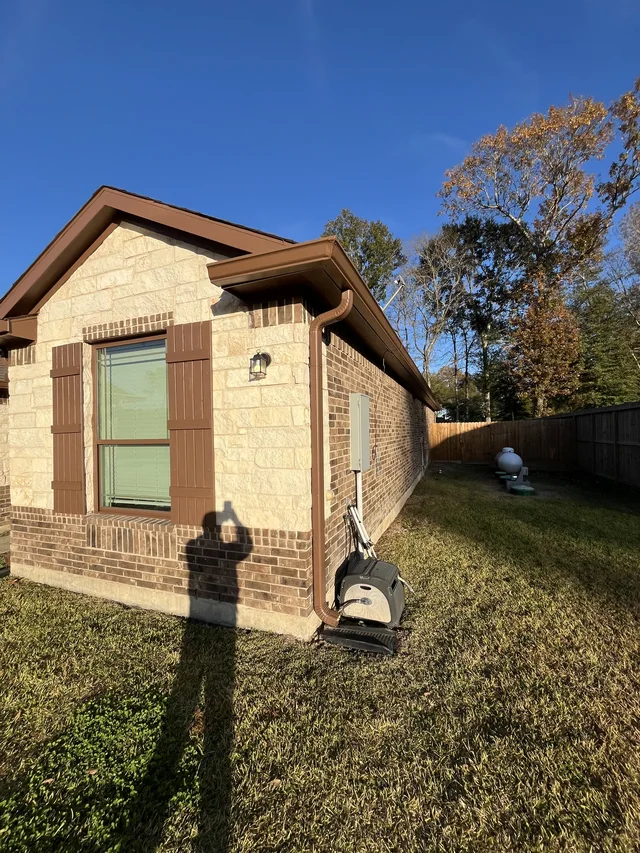
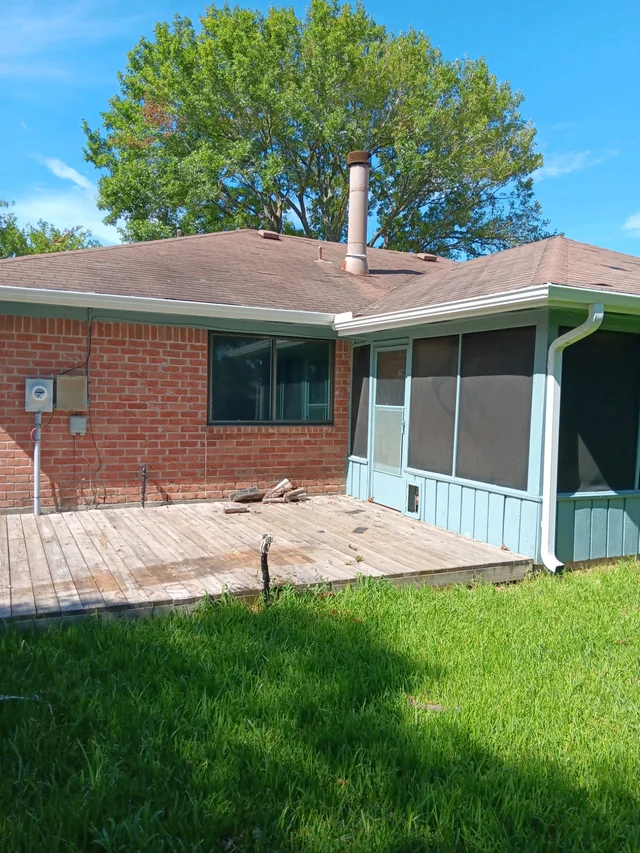
- Is the downspout currently discharging runoff too close to a foundation, walkway, terrace, or planting area?
- Are there long runs or major valleys feeding one section?
- Is the fascia sound enough for secure attachment?
- Would debris shields address the actual foliage and accumulation patterns around the home?
Common questions
Is an on-site review still needed?
In most cases, yes. Background knowledge prepares homeowners for productive discussions, though precise roof dimensions, fascia integrity, outlet positioning, and water routing must be evaluated on-site.
Can I request a quote without footage?
Yes. Submit the property location, callback number, scope of work, relevant details, and confirmation to schedule a no-cost assessment.